



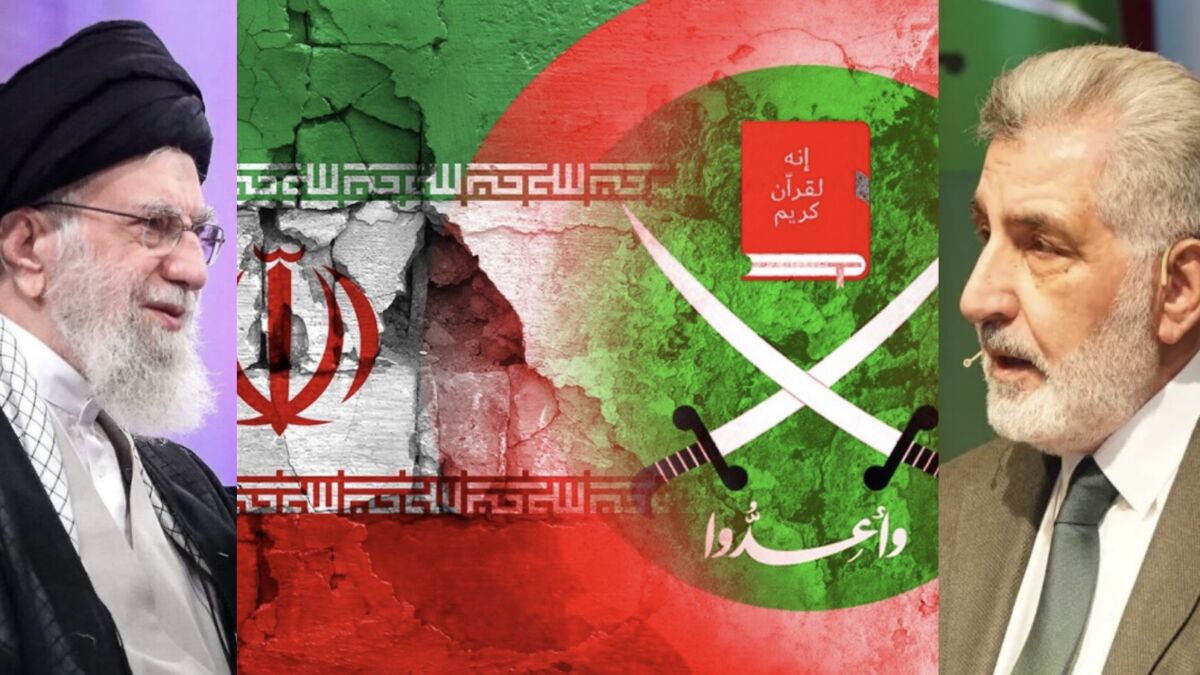
In a letter dated June 18, 2025, addressed to the Supreme Leader of the Iranian Revolution, Ayatollah Ali Khamenei, the acting General Guide of the Muslim Brotherhood, Salah Abdel Haq, announced the Brotherhood’s “full support” for the Iranian regime and proposed a joint strategy to “gather forces” and “unify the efforts” of Islamist movements.
While expressing satisfaction over the “defeat” inflicted on Israel on October 7, the leader of the Muslim Brotherhood considers the Israeli attack on Iran as “A new phase in the aggression against Palestine.”
Calling for an end to divisions between Sunnis and Shiites in the name of the necessary “unity of the Islamic ummah” in the face of the “common enemy” that is the “Zionist entity,” the Brotherhood’s Guide proposes to his Iranian counterpart a “comprehensive strategic vision” aimed at rallying the will of the “living and active forces” of the “Islamic Ummah,” by “unifying their efforts” to confront the “fire of occupation and its supporters [which] makes no distinction between our origins or our schools of thought” and seeks to “expand the aggression to the entire resistance environment, whether it be a central state like the Islamic Republic of Iran, or the Islamic movement [i.e., Hamas], at the heart of which lies the Muslim Brotherhood.”
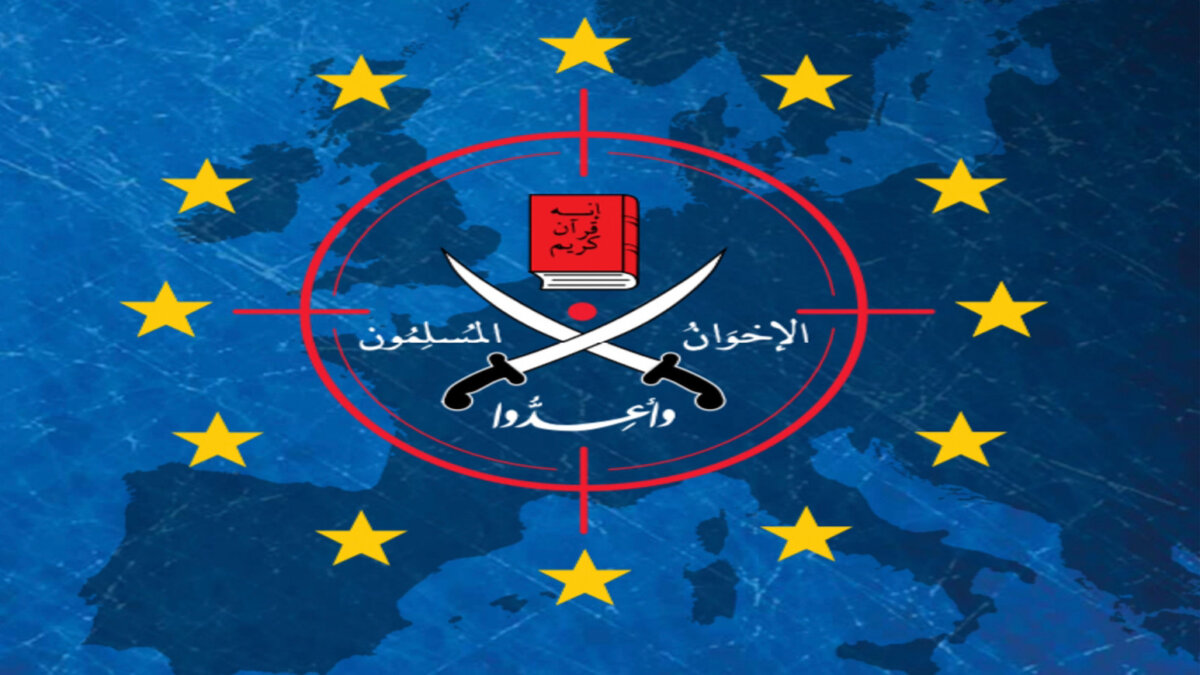
Commissioned by the Élysée Palace during a special Defense Council held in January 2024, a report on the Muslim Brotherhood’s strategy of infiltration (entryism) in France was prepared by the Ministries of the Interior and Foreign Affairs. Under the supervision of diplomat Pascal Gouyette and Prefect François Courtade, a group of senior civil servants—tasked in April 2024—visited four European countries and ten French departments, interviewed over 200 individuals (including intelligence officers, religious leaders, researchers, elected officials, and diplomats), and submitted a report to the authorities in July 2024.According to the Ministry of the Interior, the report “highlights a serious threat, characterized by a double discourse combining insularity, concealment, and apparent respect for the rules, with the aim of replacing national unity with new forms of allegiance that break away from the republican tradition.”Ten months later, the government—at President Macron’s request to formulate “proposals commensurate with the seriousness of the findings”—decided to publish a “redacted version” of the report (to protect sources, as is standard when declassifying documents from “Secret Défense” status).The report was described as “damning” by Interior Minister Bruno Retailleau.
Excerpts:
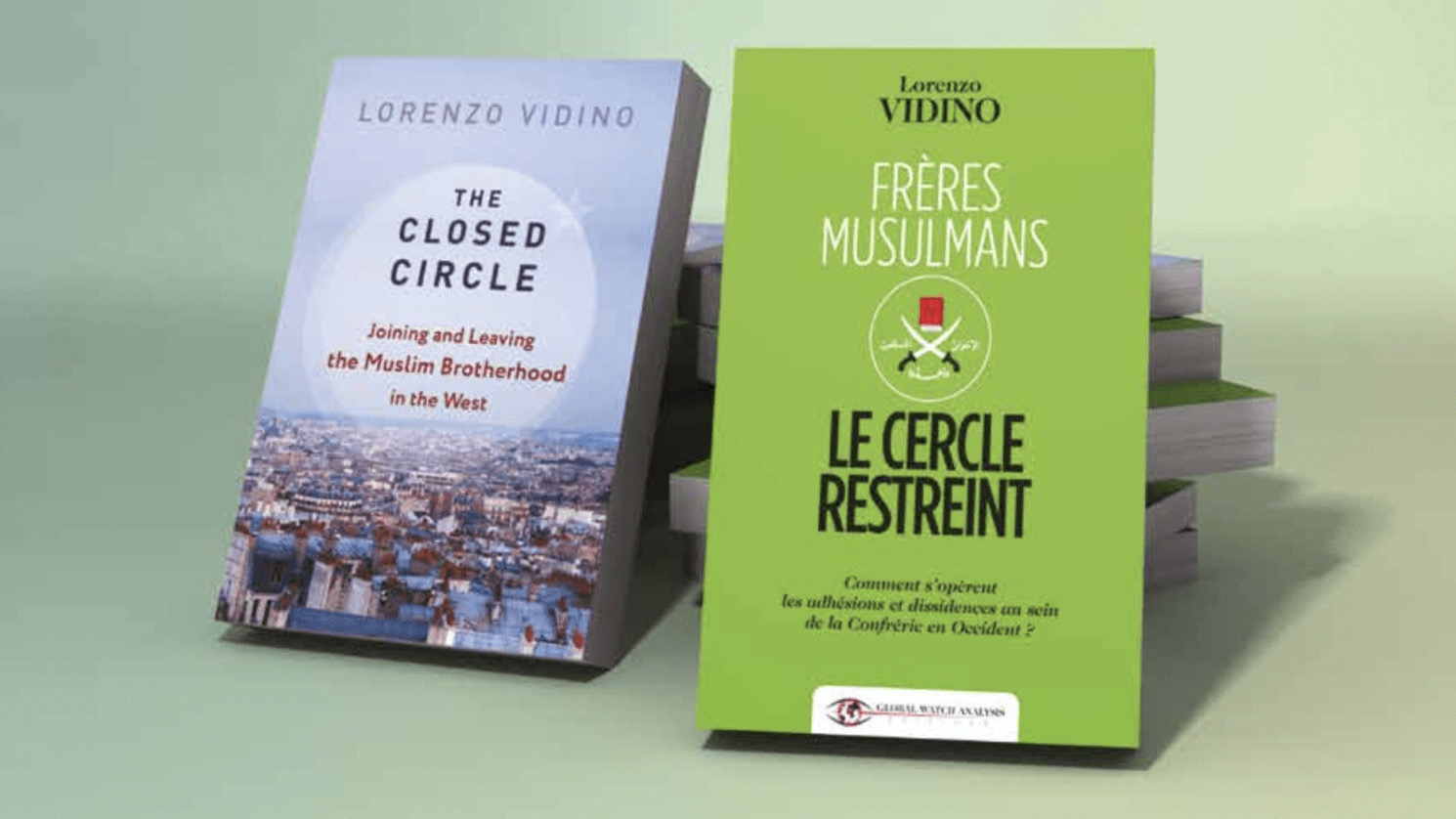
While the cases analyzed in this book clearly demonstrate common patterns of discontent among the former Western Brotherhood members profiled, one should not draw generalizations. It is difficult to determine if they constitute outliers or if their stories are indicative of a larger phenomenon of dissatisfaction inside the movement. Is the Brotherhood in the West in crisis, as some argue?1 Should the movement’s success or failure be judged by the growth and the stability of its membership? Or, since the Brotherhood is a movement seeking to mobilize the masses but willing to open itself only to few selected members, should success be assessed in another way, such as ability to exert influence within Western Muslim communities and Western elite circles? These questions cannot be answered easily. Moreover, irrespective of the metrics employed in assessing the Brotherhood, the answer is likely to differ from country to country. Yet it is clear that the 2010s have been an earth-shattering decade for the global Muslim Brotherhood movement and, consequently, for the Brotherhood in the West as well. The primary driver of change has been the so-called Arab Spring, with all its complex and still unfolding dynamics, which has had a huge impact on Brotherhood organizations in the East and the West.
A confidential report by a European intelligence agency October 2021 mentions a secret alliance between Qatar and Turkey, sealed during a “coordination meeting” dedicated to strengthening collaboration between the two countries on “support for the Muslim Brotherhood in Europe”.
We reproduce here large excerpts from this edifying report:
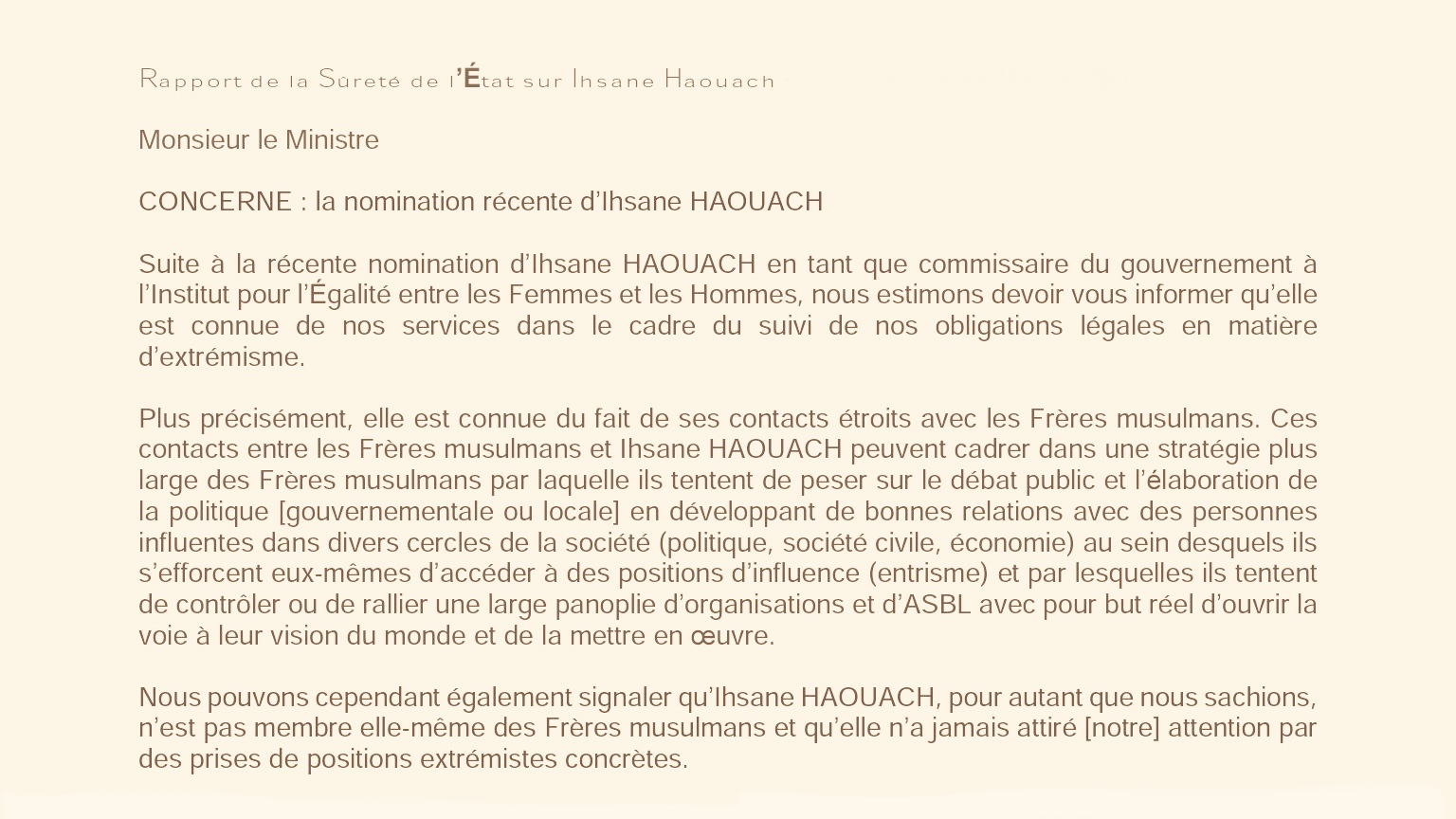
This report by the Belgian State Security Service was drawn up in the context of the “Ihsane Haouach affair”, named after this veiled community activist who was appointed government commissioner at the Institute for the Equality of Men and Women last May and then forced to resign a few weeks later following the revelation of her “close contacts with the Muslim Brotherhood”.
The report criticises the entryism practised by the Muslim Brotherhood in order to “influence public debate and policy-making (governmental or local)” and warns against the Muslim Brotherhood’s “doctrine of concealment” “by which they allow themselves a certain flexibility with regard to certain orthodox Islamic prescriptions, adapt their discourse to their audience, and conceal their true intentions and convictions”.
He concludes that the Muslim Brotherhood “cultivates a public image of well-integrated, moderate and (relatively) progressive European Muslims”, but “aims in the long term at the progressive Islamisation of European society in all its components”.
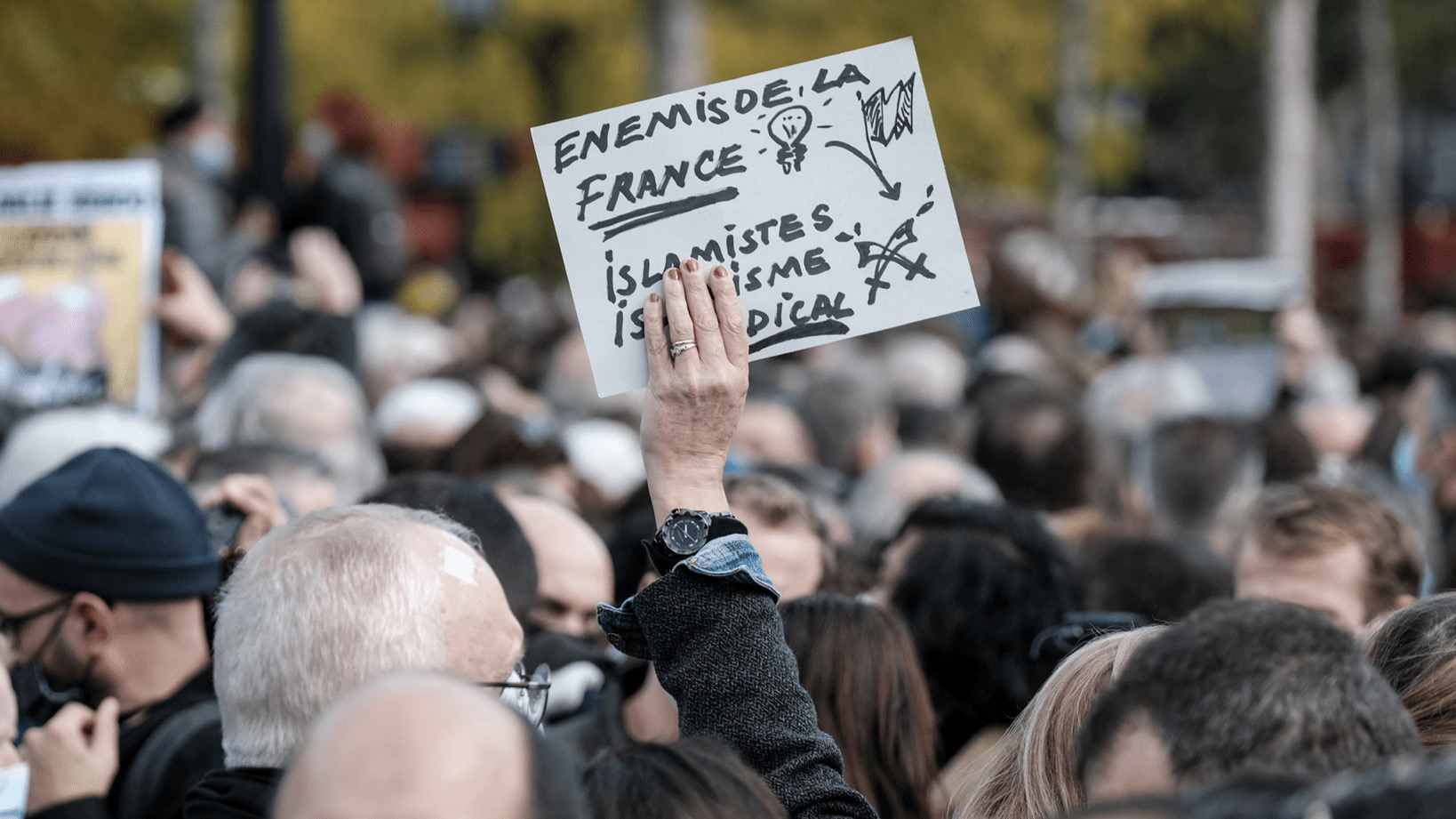
The term “Islamo-leftism” is controversial. Imprecise and too conflating, we prefer, at Global Watch Analysis, the more explicit terms “leftist collaborators of Islamism” or “useful idiots of Islam”! However, “Islamo-leftism”, in the sense of the compromise of certain components or movements of the extreme left with Islamism (political or jihadist) does exist. A long investigation carried out in 2004, for the needs of our book “Ben Laden, la destruction programmée de l’Occident” published that year by Jean Picollec, shows that this “Islamo-leftism” does not only kill the debate of ideas in French universities!
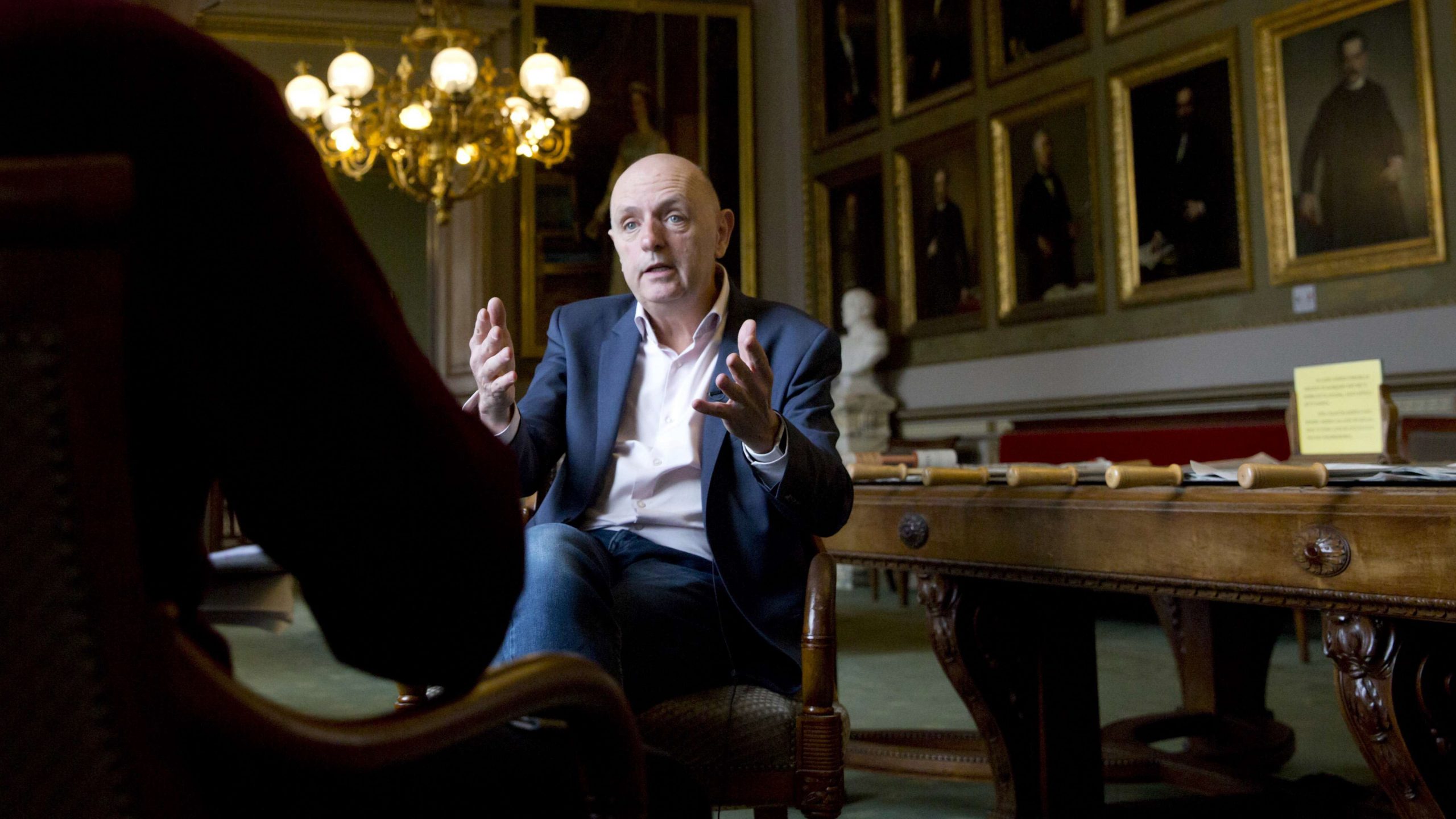
Georges Dallemagne, former director of Humanity & Inclusion, now Belgian federal deputy, has just returned from Nagorno-Karabakh where he carried out an observation mission in the heart of the conflict between the Armenian minority and Azerbaijan.
He claims to have observed “war crimes” and confirms the presence of “jihadist mercenaries” dispatched to the scene by Turkey.
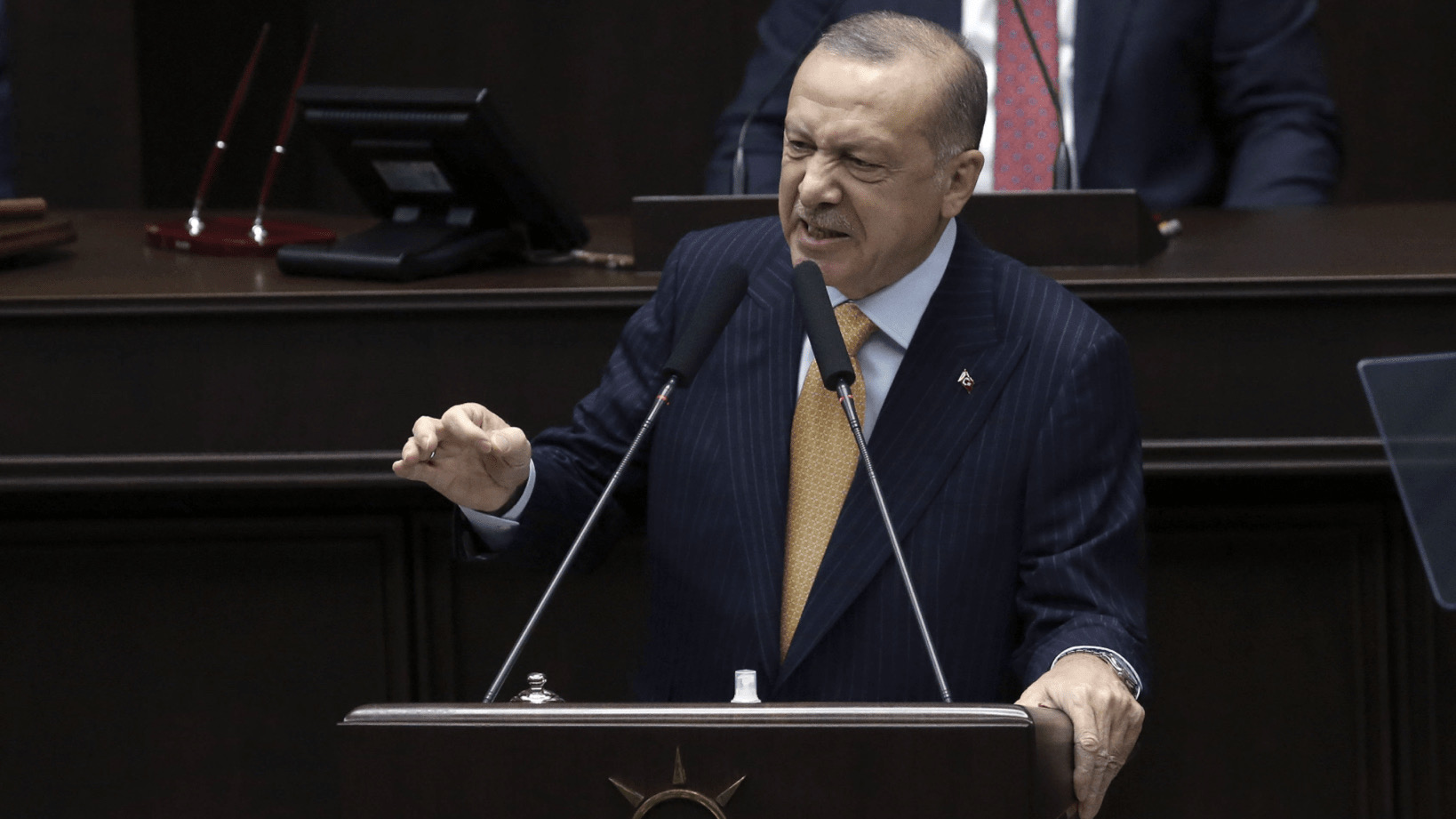
Taking advantage of the anti-French boycott campaign, orchestrated by Islamist ulama, in several Muslim countries, following the republication of the caricatures of the Prophet Mohammed, Turkish President Recep Tayyip Erdogan has proclaimed himself leader of an alleged movement for the defense of the prophet of Islam.
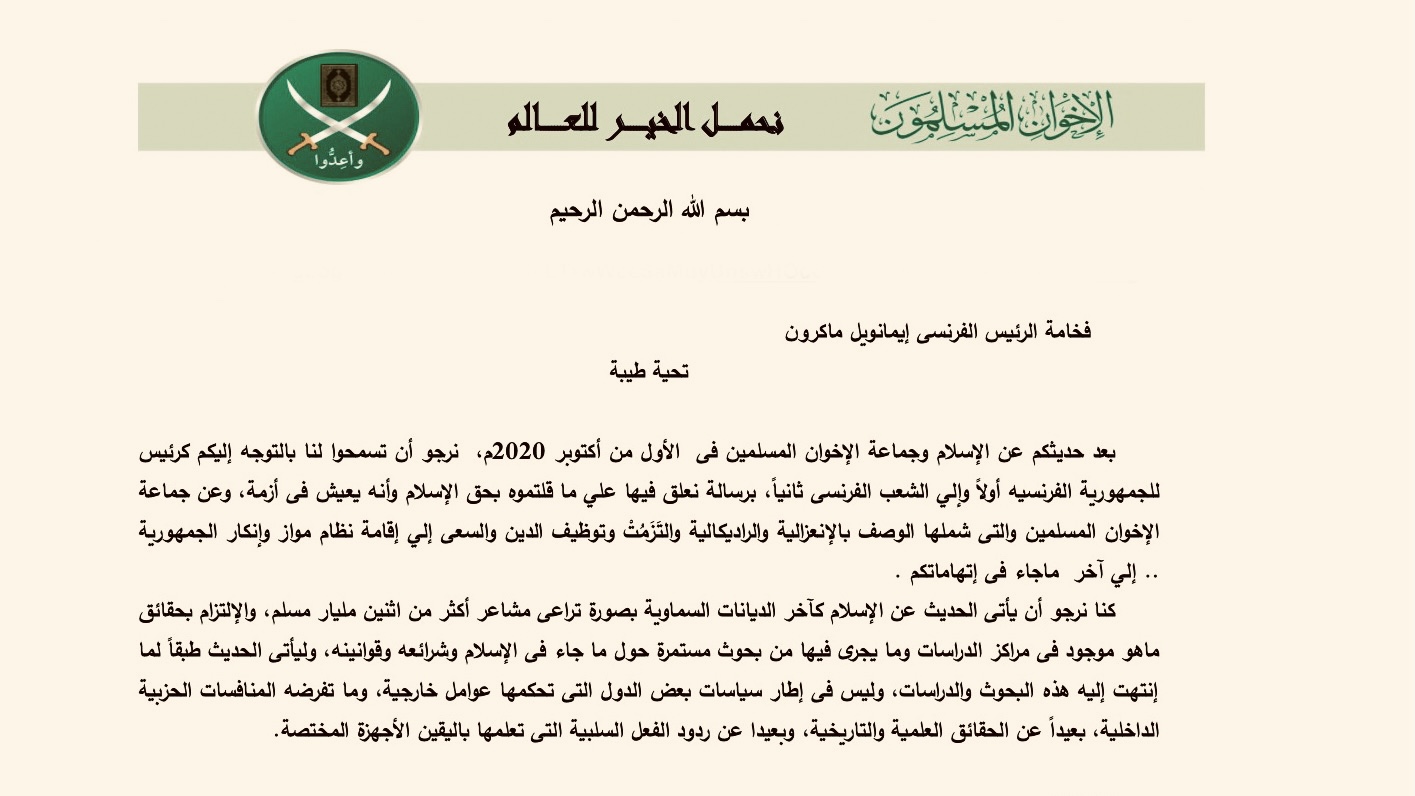
Freshly appointed Interim Supreme Guide, Ibrahim Mounir, the spokesman of the Muslim Brotherhood in Europe, who has presided over the “International Organisation” of the Brotherhood since 1982, makes thinly veiled threats against France, accusing Macron of “disrespecting 2 billion Muslims” and reaffirming the supremacy of the laws of Allah over those of the Republic…
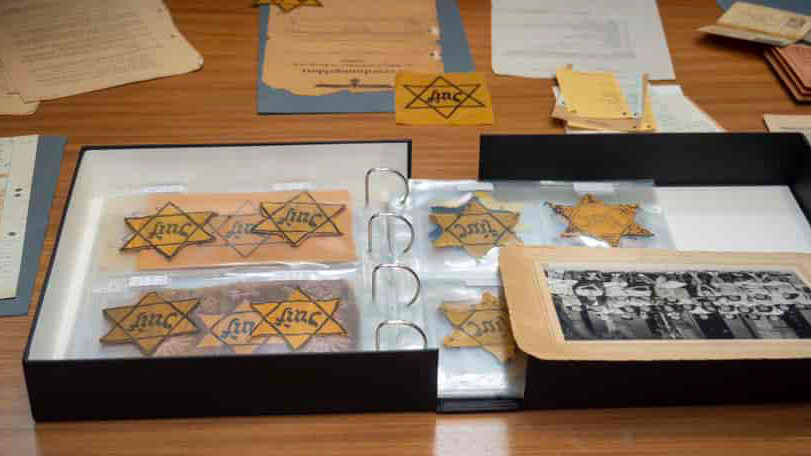
Highlights of the heartbreaking book of our colleague Jean-Marie Montali ‘We are the voices of the dead, the last deportees testify’, which has just been published by Le Cherche Midi. 75 years after the liberation of the camps, these testimonies from survivors, which resound like voices from beyond the grave, describe the unspeakable and name with singular sobriety the absolute horror of the Holocaust.
